
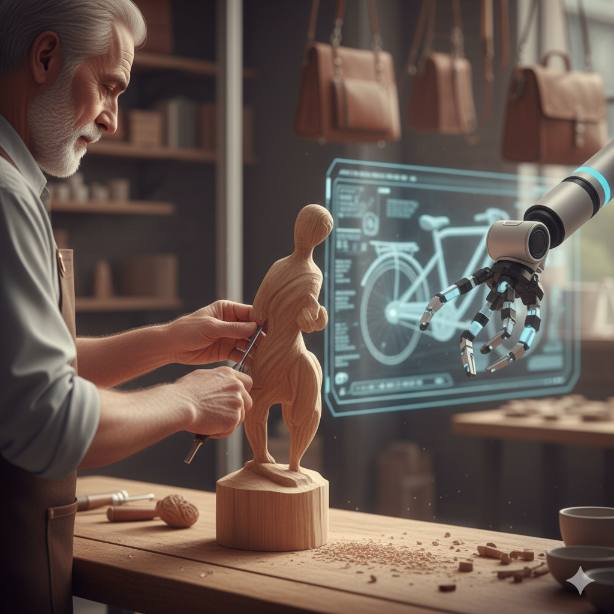
Introduction: A New Relationship Between Tradition and Innovation
For decades, the rise of digital tools has sparked fears that craftsmanship would be overshadowed by automation and mass production. Yet the reality emerging today is very different. Rather than threatening traditional know-how, digital technologies are increasingly becoming allies—enhancing, preserving, and transmitting skills that might otherwise disappear.
This evolution, often referred to as Craftsmanship 2.0, represents a new era in which artisans harness digital innovation to expand their capabilities, reach new audiences, and strengthen the cultural and economic relevance of their craft.
Craftsmanship 2.0 does not replace the artisan’s hand—it empowers it.
Digital Tools as Guardians of Traditional Skills
New technologies initially seen as disruptive have revealed an unexpected role: helping safeguard traditional practices by making them more accessible, adaptable, and resilient.
1. Digitization as a Tool for Cultural Preservation
High-resolution scanning, 3D modeling, and digital archiving allow artisans and institutions to document rare techniques, patterns, and forms. This ensures:
- Long-term preservation of heritage design
- Accurate reproduction of endangered craft techniques
- Transmission of knowledge across generations
Artisans can now build digital libraries of shapes, textures, prototypes, and craft processes that would otherwise risk extinction.
2. Technology Extends Rather Than Diminishes Hands-On Expertise
Tools such as 3D printers, laser cutters, and CNC routers assist artisans by handling repetitive, precision-heavy, or labor-intensive tasks. This frees makers to focus on:
- Creative ideation
- Hand finishing
- Aesthetic refinement
- Artistic experimentation
In this context, technology becomes an extension of handcraft, not a replacement for it.
3. Increasing Access to Craft Education
Digital learning platforms, VR simulations, and online workshops make traditional skills accessible globally. People can learn:
- Woodworking
- Ceramics
- Textile weaving
- Metalwork
- Leathercraft
Technology helps rejuvenate interest in crafts once seen as outdated or inaccessible.
Hybrid Crafting: Where Old Meets New
One of the defining features of Craftsmanship 2.0 is the emergence of hybrid workflows—methods that blend digital fabrication with traditional handcrafting.
1. Digital Tools Create Precision Foundations
Artisans use digital tools to generate complex shapes, accurate templates, and repeatable structures that serve as bases for hand finishing. Examples include:
- 3D printed frameworks for ceramics, jewelry, or sculpture
- Laser-cut textiles ready for embroidery
- CNC-shaped wood ready for carving
This synergy provides both structural precision and human expression.
2. Traditional Skills Add Depth and Authenticity
No machine can replicate the tactile richness, intuitive decisions, or emotional nuances of a skilled hand. Once digital machines complete foundational steps, artisans add character through:
- Hand carving
- Surface texturing
- Glazing and painting
- Engraving
- Natural finishing
The final product carries visible signs of human involvement—essential for craft identity.
Digital Craftsmanship Enhances Individual Creative Identity
1. Signature Styles Encoded Digitally
Artisans can embed their stylistic signature into parametric models or digital textures, ensuring consistency without losing identity.
Digital tools allow creators to scale their vision without diluting their uniqueness.
2. Enabling Hyper-Personalization
With digital design and on-demand fabrication, artisans can offer bespoke items tailored to individual preferences—something mass manufacturing cannot replicate.
This strengthens the emotional connection between maker, object, and customer.
3. Supporting Storytelling and Transparency
Digital traceability helps artisans communicate:
- Material origin
- Craft process
- Sustainability values
- Authenticity certifications
These narratives reinforce the value of traditional craftsmanship in a modern context.
Ensuring Economic Sustainability for Artisans
Rather than making craft obsolete, digital tools offer new business models for artisans.
1. E-Commerce and Global Market Reach
Platforms powered by automation, social media, and smart logistics enable small artisans to reach international audiences without intermediaries.
2. Low-Volume, High-Value Production
Digital workflows support small-batch production—perfect for artisans who prioritize quality over scale.
3. Reducing Labor and Material Waste
Technologies like CNC and 3D printing minimize errors and optimize material usage, reducing costs and environmental impact.
Digital Apprenticeship and Skill Transmission
1. Tutorials Powered by AI and VR
Interactive tools let learners practice complex techniques virtually before applying them in real materials.
2. Adaptive Learning Systems
AI can analyze a learner’s progress and adapt lessons accordingly, ensuring precise skill development.
3. Digitally Preserved Craft Lineages
Artisans can record and transmit their techniques digitally, preserving cultural heritage in ways handwritten notes never could.
Challenges and Ethical Considerations
1. Maintaining the Human Touch
As digital tools become more powerful, makers must intentionally preserve handcraft authenticity to avoid over-automation.
2. Avoiding Skill Dilution
Digital workflows must complement—not overshadow—manual skills.
3. Ensuring Fair Access
Training, funding, and access to equipment are essential to avoid technological gaps between artisans.
Conclusion: Technology as the Protector of Craft’s Future
Craftsmanship 2.0 represents a world where tradition and technology reinforce one another. Digital tools help artisans document, teach, enhance, and expand their skills—ensuring that centuries-old practices remain alive, relevant, and economically viable.
Rather than replacing craftspeople, technology protects traditional skills by making them adaptable to contemporary markets and creatively sustainable for generations to come.
The future of craft is not digital or handmade. It is both—a collaborative, hybrid approach where human artistry and digital intelligence shape objects that honor the past while embracing the future.