Introduction: A Shift From Uniformity to Individuality
For more than a century, mass production defined global manufacturing. It brought affordability, speed, and accessibility—but at the cost of uniformity. In today’s increasingly robotized world, hyper-standardized products no longer satisfy consumers seeking meaning, authenticity, and personal connection.
This shift is opening up unprecedented opportunities for artisans, makers, and small creative studios. Far from being pushed out by automation, they are becoming key players in a market increasingly driven by customization, storytelling, and craftsmanship. As robots handle repetitive work at scale, artisans can offer something machines cannot: human identity, originality, and emotional value.
The transition from mass production to personalization marks a new economic landscape—one where handcrafted and hybrid-crafted products thrive.
Why Personalization Is Reshaping Consumer Demand
1. Desire for Meaningful, Unique Objects
In an era of mass-produced goods, consumers crave items that feel special. Personalization offers:
- A sense of ownership
- Emotional attachment
- Products that reflect identity
- Cultural and personal relevance
Artisans naturally excel in creating one-of-a-kind pieces with character and soul.
2. Shift Toward Experience-Based Consumption
Younger generations prefer experiences—stories, relationships, authenticity—over standardized products. Supporting artisans allows consumers to:
- Connect with the maker
- Understand the creative process
- Own items with narrative value
Customization becomes part of the experience itself.
3. Ethical and Sustainable Choices
Handcrafted and small-scale production often align with values of:
- Local sourcing
- Sustainable materials
- Transparency
- Reduced waste
Personalization fits perfectly into these eco-conscious trends.
New Market Opportunities Enabled by Robotization
1. Personalization at Scale Through Digital Tools
Robotics and automation remove repetitive work, enabling artisans to focus on creative decision-making and custom requests. Digital technologies give artisans unprecedented production power.
Examples of opportunities:
- Custom jewelry generated via 3D modeling and finished by hand
- Bespoke ceramics produced with clay 3D printers and hand glazing
- Personalized leather goods cut by laser and finished traditionally
- Tailor-made furniture combining CNC precision and artisanal assembly
Automation enhances productivity without erasing identity.
2. Micro-Manufacturing and Local Production Studios
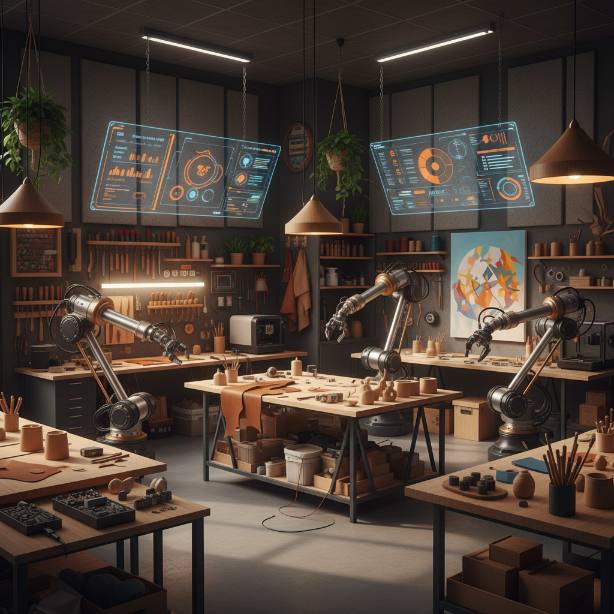
Robotized tools—3D printers, micro CNC routers, robotic arms—allow artisans to run mini-factories with minimal resources.
Benefits include:
- Lower production costs
- On-demand manufacturing
- Reduced inventory waste
- Faster custom orders
- Ability to create limited editions efficiently
This empowers artisans to compete with larger manufacturers while keeping craft values intact.
3. New Hybrid Crafting Business Models
The fusion of craft and digital fabrication creates new market niches.
Hybrid crafting enables:
- Custom forms generated algorithmically
- Hand finishing for authenticity
- Small-batch production of unique series
- Personalized variations at low cost
These models are ideal for home décor, collectibles, jewelry, fashion accessories, and art objects.
4. Luxury Customization and Bespoke Design
Personalization is expanding rapidly in the luxury market. High-end consumers seek signature pieces that blend artistry with precision.
Opportunities include:
- Made-to-order jewelry with parametric variations
- Personalized watch components
- Custom home objects such as lamps, vases, or sculptures
- Bespoke metalwork enhanced by additive manufacturing
Artisans gain visibility by offering craftsmanship that stands apart in a world of robotic precision.
5. Collaborations With Brands Seeking Authenticity
Many brands now integrate artisanal skills into their collections to increase perceived value.
Partnerships include:
- Designers collaborating with craft studios
- Makers producing limited editions for global brands
- Hybrid collections combining industrial efficiency with handmade accents
Artisans become cultural ambassadors for brands navigating personalization trends.
Digital Tools That Help Artisans Compete in a Personalized Market
1. AI-Assisted Design for Faster Custom Proposals
AI can:
- Generate variations instantly
- Visualize custom options for clients
- Optimize forms and materials
- Reduce design time
This accelerates decision-making and enhances creative exploration.
2. 3D Scanning for Tailored Fit
3D scanning supports:
- Custom-fit jewelry
- Ergonomic product design
- Personalized sculptures or portraits
- Body-matched fashion accessories
These technologies open doors to markets once dominated by large manufacturers.
3. Automation in Repetitive Production Steps
Robotics lighten the artisanal workload by automating:
- Cutting
- Polishing
- Molding
- Assembly
- Finishing assistance
This frees artisans to focus on the high-value creative steps.
What Robots Cannot Replace: The Value of Human Craft
Even in a fully automated world, certain human qualities remain irreplaceable:
- Artistic intuition
- Cultural and historical awareness
- Tactile sensitivity
- Emotional storytelling
- Imperfection as beauty
- Ethical decision-making
Artisans offer meaning and originality—values that automation alone cannot produce.
Conclusion: A Robotized World That Needs Craft More Than Ever
The transition from mass production to personalization is redefining the role of artisans. Far from being marginalized, they are becoming central contributors in a market hungry for authenticity, customization, and human connection.
By combining traditional skills with digital technologies, artisans can unlock new economic opportunities, expand creative possibilities, and secure a meaningful place in the future of production.
In a robotized world, craftsmanship is not obsolete—it is more valuable than ever.
The winning strategy is not competition with machines, but collaboration: using digital tools to amplify the unique strengths that only human creators possess.