
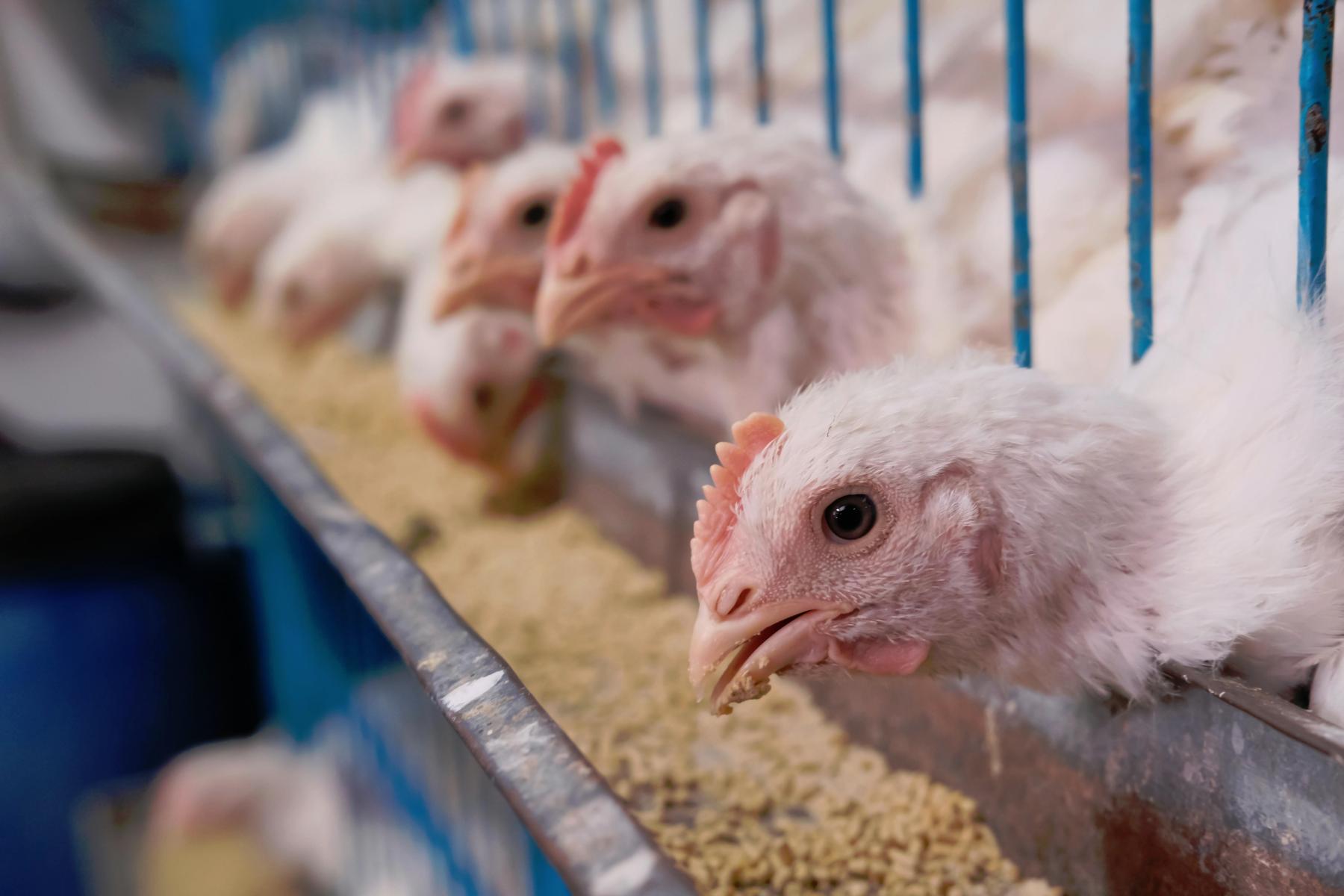
Infectious Bursal Disease (IBD), commonly referred to as Gumboro disease, is a major immunosuppressive disease in poultry that continues to influence modern poultry production worldwide.
Caused by the Infectious Bursal Disease Virus (IBDV), this viral infection primarily targets the bursa of Fabricius, a key immune organ in birds. As a result, affected chickens may experience a reduced ability to mount effective immune responses, increasing their susceptibility to other infectious diseases in poultry and impacting overall flock performance.
Understanding the origin and evolution of IBD in poultry provides valuable insights into current approaches to poultry disease prevention, biosecurity, and health monitoring.
The First Observations of Gumboro Disease (1957–1960s)
The disease was first identified in 1957 by veterinarian A. S. Cosgrove in broiler chickens in Gumboro, Delaware (USA). Initially described as “avian nephrosis” due to visible kidney lesions, the condition was later found to have a different primary target.
Further investigations demonstrated that the virus specifically affected the bursa of Fabricius, confirming the infectious and immunological nature of the disease. This led to the adoption of the term Infectious Bursal Disease (IBD), which more accurately reflects its pathogenesis.
By the late 1960s, Gumboro disease in chickens had spread across multiple regions, becoming a recognized concern in poultry production systems.
Global Spread and Evolution of IBDV Variants
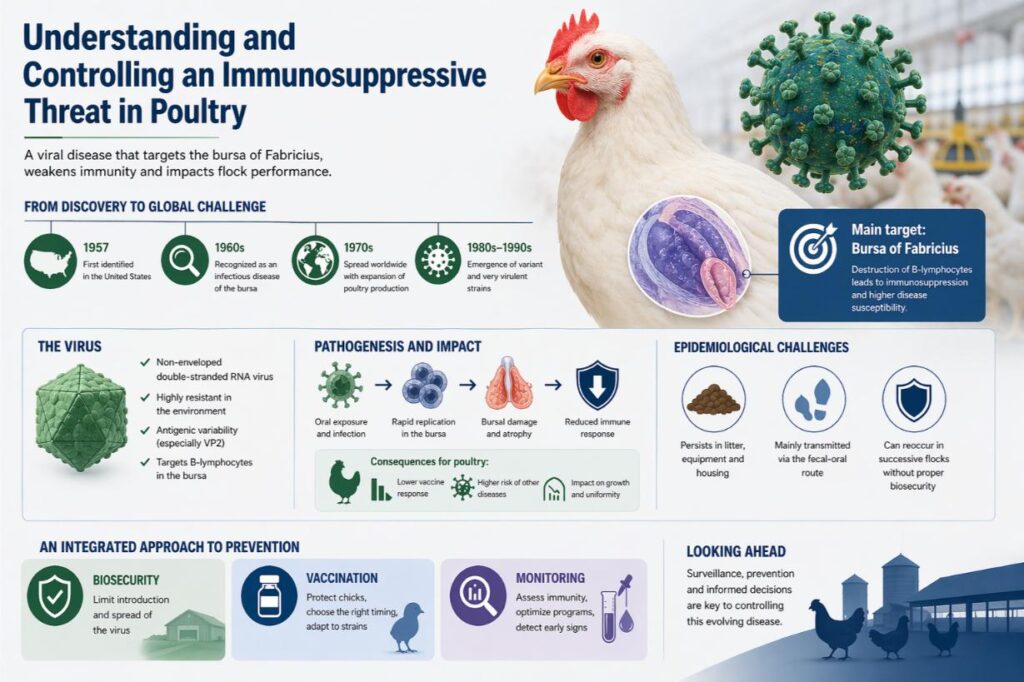
With the expansion of poultry production in the 1970s, IBDV infection in poultry spread globally. Early strains, often referred to as classical strains, generally caused moderate clinical signs and were relatively manageable under existing prevention practices.
However, the epidemiological situation evolved over time:
- Variant IBDV strains emerged, showing antigenic changes that reduced the effectiveness of existing immunity
- Very virulent IBDV (vvIBDV) strains appeared in the late 1980s and 1990s, leading to higher mortality rates and more pronounced immunosuppression
These developments highlighted the importance of continuous monitoring and adaptation of disease prevention strategies.
Virological Characteristics of Infectious Bursal Disease Virus
IBDV belongs to the Avibirnavirus genus within the Birnaviridae family. It is a non-enveloped virus with a double-stranded RNA genome divided into two segments.
Key characteristics include:
- Strong environmental resistance, allowing persistence in poultry houses
- Antigenic variability, particularly in the VP2 protein
- Specific tropism for B-lymphocytes in the bursa of Fabricius
These features contribute to the persistence of IBDV in poultry environments and explain the ongoing challenges in disease control.
Pathogenesis and Immunosuppressive Effects
Following oral exposure, IBDV infection in chickens leads to rapid viral replication in the bursa of Fabricius. This results in:
- destruction of B-lymphocytes
- inflammation followed by bursal atrophy
- reduced immune competence
Chickens between 3 and 6 weeks of age are particularly susceptible, as maternal antibodies decline while the immune system is still developing.
One of the defining features of Gumboro disease in poultry is its immunosuppressive effect, which may:
- reduce response to vaccination
- increase susceptibility to other infectious diseases in poultry
- affect flock uniformity and production performance
Subclinical infections can also contribute to long-term health and productivity challenges.
Epidemiological Challenges in Poultry Production
IBDV is highly resistant and can persist in the environment, including:
- litter
- equipment
- poultry housing surfaces
Transmission mainly occurs through the fecal-oral route, but indirect transmission via contaminated materials is also significant.
Due to this persistence, IBD in poultry may recur in successive flocks if effective poultry biosecurity measures are not consistently applied.
Prevention Strategies: An Integrated Approach
Effective control of Gumboro disease in poultry relies on combining several complementary strategies.
In today’s poultry sector, integrated prevention approaches are increasingly emphasized, and industry-focused platforms like Poultry Ceva help illustrate how biosecurity, vaccination, and monitoring work together in real-world conditions.
Biosecurity
Strong poultry biosecurity practices help reduce the introduction and spread of IBDV. These include:
- controlled access to poultry houses
- cleaning and disinfection of equipment
- proper litter management
Such measures contribute to lowering viral pressure in the environment.
Vaccination Strategies
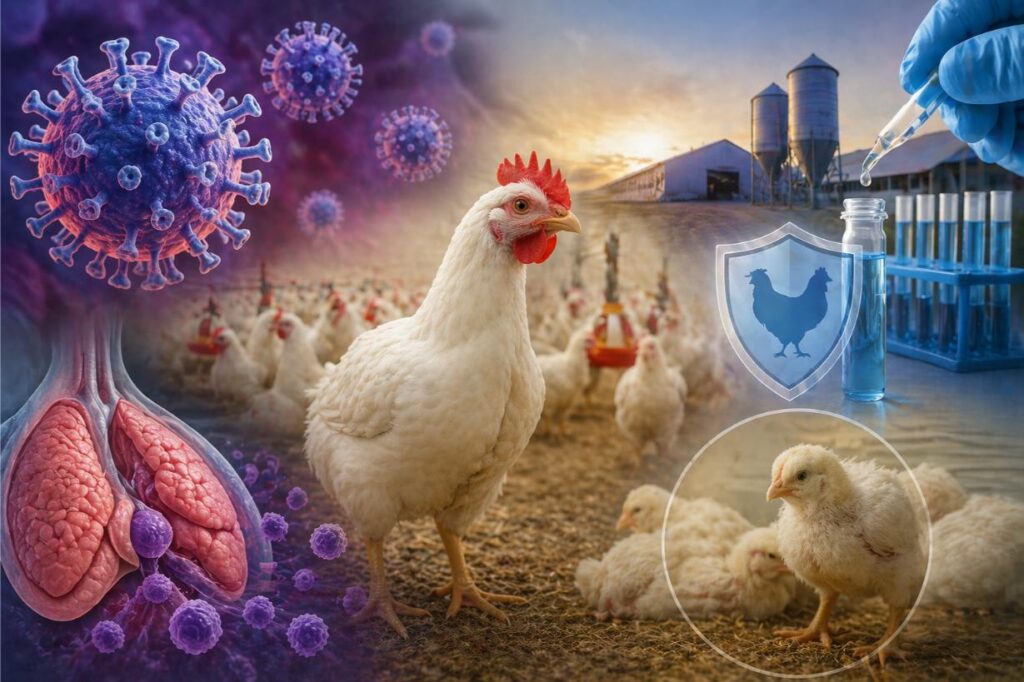
Vaccination is a key component of IBD prevention in poultry. The main objectives are to:
- protect chicks through maternal antibodies
- determine appropriate vaccination timing based on antibody levels
- adapt vaccination programs to circulating IBDV strains
Vaccination strategies may vary depending on the epidemiological context and production system.
Health Monitoring and Serological Follow-up
Regular health monitoring in poultry and serological evaluation play an essential role in managing IBD. These approaches help to:
- assess flock immunity levels
- optimize vaccination timing
- detect early signs of immunosuppression
Monitoring provides actionable data that supports informed decision-making in the field.
Lessons from the Evolution of IBD
The history of Infectious Bursal Disease in poultry illustrates how viral evolution and production practices are closely linked. From its first identification in the United States to the emergence of very virulent strains worldwide, IBD has remained a key challenge for poultry health management.
Today, effective control depends on:
- continuous surveillance of circulating IBDV strains
- integration of biosecurity and vaccination strategies
- consistent flock-level health monitoring
As poultry production continues to evolve, maintaining a proactive and informed approach remains essential to limit the impact of immunosuppressive diseases in poultry, such as Gumboro disease.