
Introduction: Scaling Creativity Without Losing Soul
For small creative studios and independent makers, growth often comes with a dilemma: how to increase productivity and keep up with demand without sacrificing artistic quality or personal identity. Unlike large manufacturers, small studios work with limited teams, tight budgets, and strong attachment to craft.
Fortunately, modern smart automation tools are reshaping the creative world, offering accessible and affordable solutions that streamline workflow, save time, and unlock new creative possibilities—while keeping human authorship and artisanal values intact.
Smart automation doesn’t mean replacing creativity. It means using technology to handle the repetitive, time-consuming, or precision-heavy tasks so makers can focus on what they do best: designing, crafting, imagining, and innovating.
Why Smart Automation Matters for Creative Studios
Small studios often juggle many responsibilities: concept development, prototyping, production, marketing, client communication, and logistics. Smart automation tools help by:
- Reducing manual workload
- Improving efficiency and consistency
- Lowering production costs
- Enhancing creative experimentation
- Supporting sustainable, low-waste workflows
- Removing technical bottlenecks
This enables independent makers to scale responsibly, maintain quality, and stay competitive.
Smart Automation Tools That Empower Creators
1. AI-Powered Design Assistants
AI tools are becoming indispensable for ideation and design development. They support creators by:
- Generating concept sketches or moodboards
- Creating texture, pattern, or material studies
- Suggesting design variations
- Predicting structural behavior
- Automating repetitive drawing tasks
AI design assistants give small studios the ability to iterate rapidly—something once reserved for large teams with advanced resources.
2. Parametric and Algorithmic Design Tools
Tools like Grasshopper, Houdini, and Fusion 360 let makers create complex geometries through rule-based modeling. Benefits include:
- Fast design modifications
- Personalized, custom-ready designs
- Automated scaling, fitting, and proportioning
- Form optimization for performance or lightweighting
These tools allow artisans to automate intellectual tasks while retaining complete creative control.
Smart Fabrication Tools for Small Studios
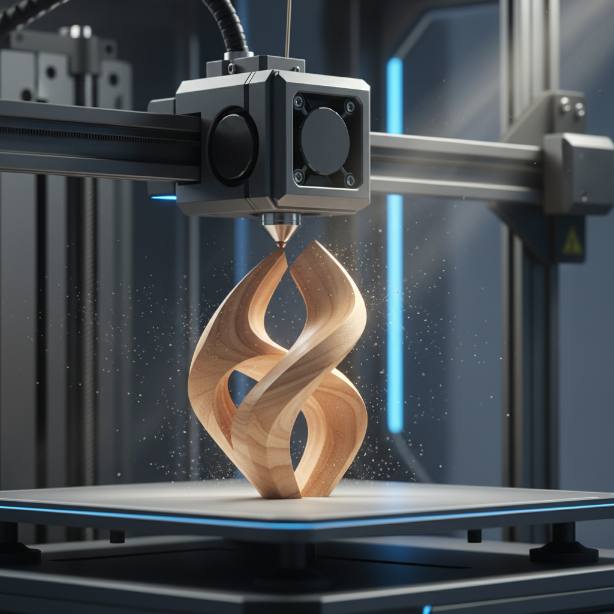
1. Desktop 3D Printers as Production Assistants
Affordable 3D printers are among the most powerful automation tools available to small studios. They support:
- Rapid prototyping
- Low-volume manufacturing
- Customized molds and jigs
- Hybrid crafting workflows
- Material experiments (bioplastics, clay, metal-filled filaments)
With the right setup, a single designer can operate a mini-factory of autonomous printers.
2. Laser Cutters and CNC Routers
These digital fabrication tools automate cutting, engraving, and shaping tasks that would otherwise require hours of manual labor.
Laser cutters excel at:
- Fast prototyping
- Intricate patterns
- Leather, wood, acrylic, and textile work
Small CNC routers offer:
- Precision machining of wood, metals, foams
- Custom molds and forms
- Detailed relief carving
Together, they reduce workload and improve accuracy, enabling creators to offer more complex or high-quality products.
3. Robotic Arms for Micro-Automation
Compact, affordable robotic arms are emerging as powerful tools for independent makers. They can automate:
- Repetitive assembly tasks
- Painting, coating, or polishing
- Soldering or welding
- Pick-and-place operations
- Multi-angle carving or machining
These systems provide industrial capability without industrial scale.
Digital Workflow Automation
1. Automated Inventory and Material Tracking
Software tools help manage materials, track usage, and reorder supplies efficiently. This reduces waste and ensures production continuity.
2. Smart Project and Production Scheduling
Platforms with automation features help studios by:
- Generating production timelines
- Prioritizing urgent tasks
- Scheduling machine usage
- Coordinating client deadlines
This ensures smoother workflows and fewer bottlenecks.
3. Automated File Preparation and Slicing
Modern slicers and CAM tools now optimize:
- Print supports
- Toolpaths
- Material usage
- Color or multi-material transitions
Makers spend less time preparing files and more time innovating.
Automating Without Sacrificing Creative Identity
1. Human-in-the-Loop Workflows
In smart creative production, humans remain the authors. Automation handles the execution, but makers guide:
- Artistic direction
- Material expression
- Hand finishing
- Visual identity
- Customization
This balance ensures that the work still feels handcrafted, even with digital assistance.
2. Using Automation to Enhance Signature Style
Automation tools can reinforce a studio’s identity by:
- Repeating signature patterns or motifs consistently
- Enabling unique geometries or textures
- Scaling bespoke pieces that retain artisanal character
Your style becomes easier to replicate, adapt, and evolve.
3. Hybrid Crafting for Authenticity
Combining digital production with hand finishing keeps the human touch alive. Examples include:
- 3D printed forms with hand-painted surfaces
- CNC-cut wood polished and assembled by hand
- Laser-engraved leather finished using traditional stitching
- AI-generated concepts refined by human intuition
This hybrid approach resonates strongly with customers seeking authenticity.
Sustainability Through Smart Automation
1. Waste Reduction
Digital fabrication minimizes offcuts and uses material only where needed.
2. Controlled Energy Use
Smart devices regulate energy consumption automatically.
3. Local, On-Demand Production
Small studios can produce only what they need, reducing stock waste and emissions.
4. Support for Circular Materials
Automation tools make it easier to work with recycled, bio-based, or upcycled materials.
Conclusion: Automation as a Creative Ally
For small creative studios and independent makers, smart automation tools represent an extraordinary opportunity. They reduce manual burden, support sustainable practices, increase output, and open pathways to innovative design. But most importantly, they allow creators to scale without losing their artistic soul.
The future of creative work is not full automation—it’s empowered creativity, where digital tools and human craftsmanship reinforce one another. When used intentionally, smart automation becomes a powerful ally that helps makers stay competitive, expressive, and sustainably productive.